
Define the Function of the Scotch Bonnet Chilli
Before using IQF whole Yellow Scotch Bonnet chillies, establish what the ingredient should contribute to the finished product.
The chillies can be used:
- Whole for controlled flavour infusion
- Roughly chopped for visible chilli pieces
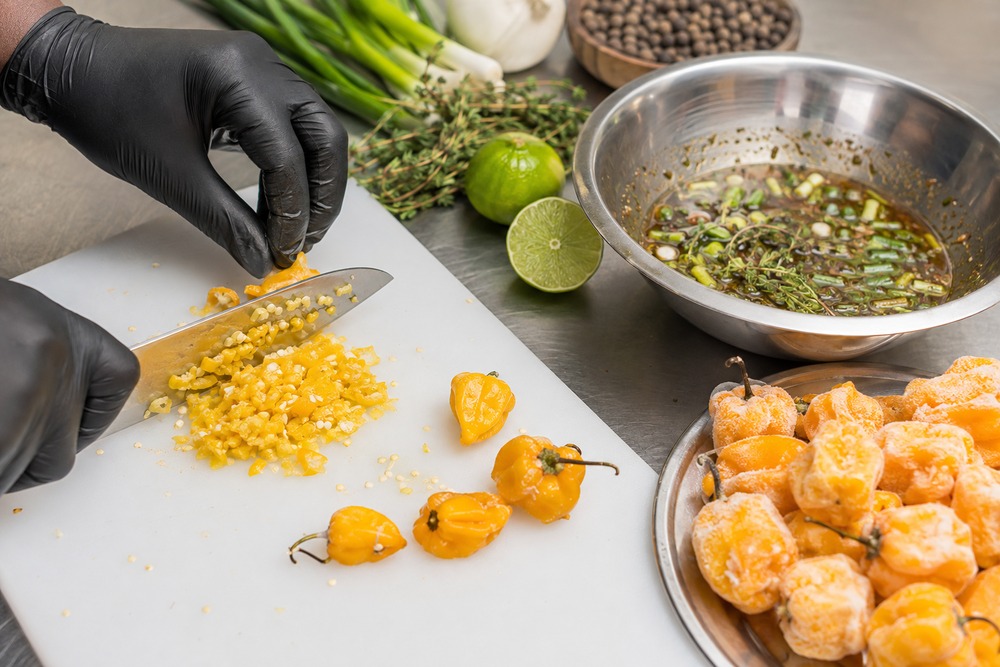
- Finely chopped for wider heat distribution
- Blended directly into jerk sauce
- Processed into a customised chilli paste
- Cooked into a Caribbean curry, stew or ready meal
Choose one method and document it. Changing from coarse chopping to fine blending, for example, may make the heat feel more intense because the chilli is distributed more evenly throughout the food.
Weigh the Frozen Chillies Accurately
Scotch Bonnet chillies naturally vary in size and shape. Counting individual chillies can therefore produce inconsistent recipe weights and unpredictable heat.
Use calibrated weighing equipment and record:
- Supplier product code
- Ingredient batch or lot number
- Frozen weight issued
- Prepared usable weight
- Total recipe weight
- Operator
- Finished-product batch code
Agree appropriate size and heat tolerances with the supplier. Review the current product specification before repeating an established recipe, particularly when changing ingredient batches.
Standardise Stalk, Seed and Internal-Tissue Treatment
Define whether the stalks will be removed and whether the complete chilli will enter the recipe. The same preparation method should be followed for every production batch.
Although chilli seeds are commonly associated with heat, they are not its only source. Capsaicinoids are concentrated mainly in the internal placental tissue surrounding the seeds. Removing some or all of this material can change:
- Heat intensity
- Fruity Scotch Bonnet flavour
- Appearance
- Texture
- Usable yield
- Recipe cost
If the chillies are trimmed, specify exactly which material should be removed and how the usable weight will be measured.
Process From Frozen or Thaw Under Control
Whole IQF chillies may be added from frozen when the manufacturing process and equipment can handle them safely and consistently. This can reduce preparation time and help maintain ingredient control.
Industrial cutters, blenders and cooking systems should be assessed to confirm that frozen chillies do not cause uneven processing or equipment damage.
Where manual preparation is necessary, thaw the chillies under controlled refrigerated conditions. Avoid prolonged exposure at ambient temperature and follow the site’s approved food-safety procedure.
Can Frozen Scotch Bonnets Be Added Directly to a Sauce?
Yes, where the recipe includes a suitable cooking or blending stage. Manufacturers must account for the effect of frozen ingredients on batch temperature, cooking time and process control.
If whole chillies are used only for infusion, ensure that the removal or retention procedure is clearly defined.
Build a Balanced Jerk or Caribbean Flavour Base
Yellow Scotch Bonnet chillies deliver strong heat with a distinctive fruity aroma. They work particularly well with traditional and contemporary Caribbean ingredients, including:
- Allspice
- Thyme
- Garlic
- Ginger
- Spring onion
- Lime juice
- Onion
- Tropical fruits
- Brown sugar
- Savoury or umami seasonings
In a Scotch Bonnet jerk sauce, the chilli should complement the allspice, thyme and aromatics rather than overwhelm them.
For a Caribbean ready meal, consider portion size and how the sauce is distributed across rice, vegetables, meat or plant-based proteins. The same chilli inclusion rate may be perceived differently in a concentrated sauce and a complete meal.
<h2>Step 6: Control the Ingredient Addition Sequence</h2>
Establish when and where the Scotch Bonnet chillies enter the manufacturing process. A fixed addition sequence supports repeatable flavour extraction and heat distribution.
Document:
- Ingredient temperature
- Addition point
- Order of ingredients
- Mixer or blender speed
- Processing time
- Vessel fill level
- Cooking temperature and duration
If the chilli is added late in the process, it may retain a fresher and fruitier character. Longer cooking may integrate the flavour differently. These effects should be assessed during product development and confirmed at production scale.
Set a Target Particle Size
Particle size has a significant effect on the appearance and sensory character of Scotch Bonnet chilli sauce.
A coarse blend may provide visible chilli pieces and occasional concentrated bursts of heat. A finer blend usually distributes the chilli more evenly but may also change the sauce’s viscosity, colour and perceived intensity.
Set a standard blending programme covering:
- Blade or processing equipment
- Batch size
- Blender speed
- Blending time
- Target particle size
- Acceptable visual appearance
Inspect particle size and distribution as part of routine batch-release checks.
Validate Heat and Flavour After Cooking
Scotch Bonnet chillies are commonly associated with approximately 100,000–350,000 Scoville Heat Units, although natural variation means the current supplier specification should always be used.
Finished-product heat will also depend on:
- Chilli inclusion rate
- Particle size
- Cooking conditions
- Fat and sugar content
- Acidity
- Serving temperature
- Portion size
Assess the fully prepared product using trained personnel and a controlled sensory method. Never taste concentrated chilli material directly.
Record heat onset, peak intensity, duration, fruity flavour, aroma and overall balance. Repeat the assessment after an appropriate storage period where shelf life may affect flavour, texture or heat perception.
Plan for Yield and Production Losses
Include stalk removal, trimming, equipment residue, transfer losses and cooking loss in the yield calculation.
Measure the actual usable chilli weight instead of assuming that every kilogram issued reaches the finished product. Monitoring these losses improves recipe accuracy, cost control and batch consistency.
Key Takeaways
For consistent jerk sauces and Caribbean ready meals:
- Define whether the chillies will be infused, chopped or blended
- Weigh frozen Scotch Bonnets rather than counting them
- Standardise stalk and internal-tissue treatment
- Control frozen processing or refrigerated thawing
- Document the addition and cooking sequence
- Establish a target particle size
- Validate finished heat, flavour and texture
- Include preparation and transfer losses in yield calculations
Read the Yellow Scotch Bonnet FAQs and the benefits of Yellow Scotch Bonnet chillies.