
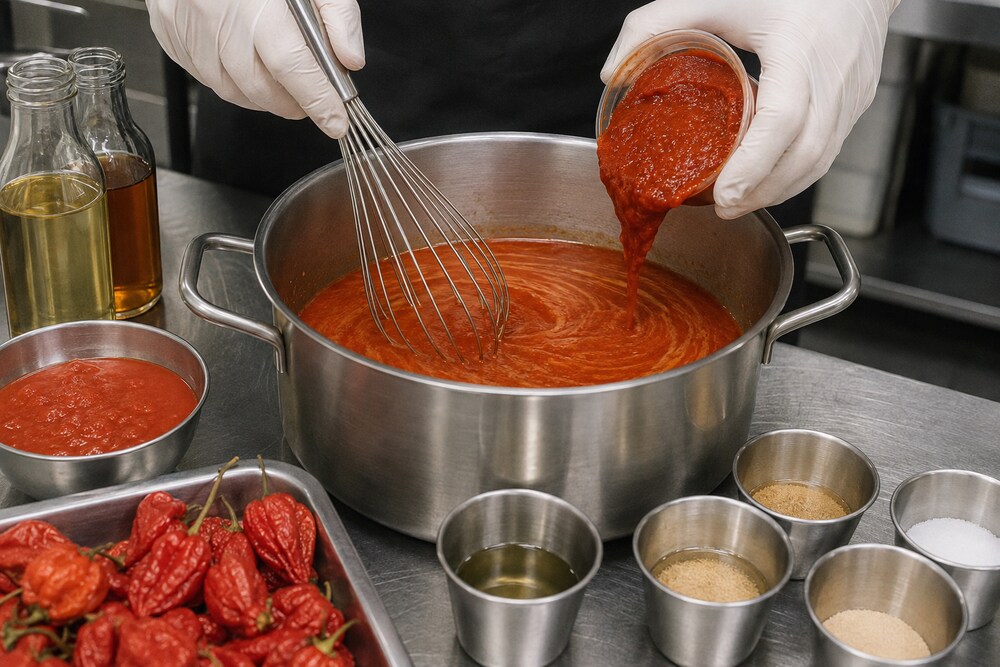
Before using IQF Red Ghost chilli purée, create a clear product brief.
Define the Hot Sauce or Marinade Brief
- Target consumer
- Intended serving size
- Desired heat intensity
- Sauce or marinade viscosity
- Required acidity or pH
- Sweet, fruity, savoury or smoky flavour direction
- Cooking and filling process
- Packaging format
- Intended shelf life
- Storage conditions
A Ghost chilli hot sauce used a few drops at a time can support a different heat level from a marinade applied generously to meat, fish or vegetables. Serving size must therefore be considered when establishing the chilli inclusion rate.
Check the Ghost Chilli Heat Specification
Ghost chillies, also known as Bhut Jolokia chillies, are commonly associated with heat levels from approximately 800,000 to more than one million Scoville Heat Units. However, natural chilli products can vary by crop and batch.
Always use the current supplier specification or batch documentation instead of relying on a generic figure found online.
Record the:
- Supplier product code
- Ingredient batch or lot number
- Declared heat range
- Quantity used
- Finished-product batch code
Review any change in specification before repeating an existing recipe. A previously successful inclusion rate may need to be reassessed when the raw material changes.
Weigh the Frozen Ghost Chilli Purée Accurately
Never estimate Ghost chilli purée dosage by colour, volume or appearance. Use a calibrated scale with enough resolution to measure the required quantity accurately.
The weighing procedure should specify the approved scale, acceptable tolerance, container tare method and operator checks.
If the supplied frozen unit is larger than the required dose, follow a controlled portioning or thawing procedure. Consider food safety, temperature control, operator exposure, traceability and the shelf life of any unused material.
Return unused purée to the correct storage conditions promptly. Avoid uncontrolled or repeated partial thawing.
Build a Balanced Hot Sauce or Marinade Base
Ghost chilli has an intense, persistent heat accompanied by fruity and slightly smoky characteristics. A well-designed base should complement these qualities rather than simply attempt to hide them.
Which Ingredients Work Well With Ghost Chilli?
Suitable flavour partners may include:
- Tomato
- Mango, pineapple or passion fruit
- Vinegar or citrus
- Garlic and ginger
- Roasted onion or sweet pepper
- Brown sugar, honey or fruit concentrates
- Soy sauce and other umami ingredients
- Herbs and warm spices
Balance the recipe through controlled formulation trials. Sugar, fat and acidity may change how consumers perceive the heat, but they do not remove capsaicin from the product.
Acid should also be managed as a technical parameter rather than added only for flavour. Where pH contributes to product safety or shelf-life control, the formulation and process must be validated by a suitably qualified food professional.
Disperse the Ghost Chilli Purée Completely
Adding a small quantity of concentrated chilli purée directly to a large vessel can produce poor initial dispersion or localised hot spots.
For more consistent distribution, blend the measured purée into a defined quantity of a compatible liquid ingredient or sauce base. Add this premix to the main vessel under controlled agitation.
How Should the Mixing Process Be Controlled?
Document:
- Premix ratio
- Ingredient temperature
- Order and point of addition
- Mixer speed
- Mixing time
- Vessel fill level
- Recirculation conditions
During process validation, take samples from different areas of the vessel. Samples may also be collected from the beginning, middle and end of the filling run.
The objective is to confirm that every pack delivers the intended Bhut Jolokia flavour and heat intensity.
Reassess the Product After Heating and Storage
Processing can alter flavour, viscosity, colour and the perception of heat. A sauce may also taste different after its ingredients have had time to combine.
Evaluate the product immediately after manufacture and again after an appropriate storage period.
Check:
- Initial flavour and aroma
- Speed of heat onset
- Peak heat intensity
- Lingering heat
- Sweetness, salt and acidity
- Viscosity
- Separation
- Colour
- Overall flavour balance
Use trained personnel, consistent sample sizes and a documented sensory procedure. Never taste concentrated Ghost chilli purée directly.
Using Ghost Chilli Purée in Marinades
When formulating a Ghost chilli marinade, consider both the concentration of the marinade and the amount transferred to the food.
Final heat can be affected by application rate, marination time, surface coverage, cooking method and moisture loss during cooking. Validate the complete preparation process rather than assessing the uncooked marinade alone.
Provide clear preparation and serving instructions where the end user controls dilution or application.
<h2>Safe Handling and Cross-Contact Prevention</h2>
Ghost chilli purée is a super-hot ingredient and requires a site-specific risk assessment. Controls may include protective gloves, eye or face protection, suitable ventilation, restricted dispensing and documented spill procedures.
Validate the cleaning of:
- Mixers and vessels
- Pumps and transfer lines
- Hoses and seals
- Filling equipment
- Utensils and weighing containers
Capsaicin residues can transfer unwanted heat to milder products even when they are not clearly visible.
Key Takeaways
To produce consistent hot sauces and marinades with IQF Ghost chilli purée:
- Define the target consumer, serving size and heat level
- Check the current batch-specific heat specification
- Weigh every addition accurately
- Balance heat with acidity, sweetness, salt and savoury flavours
- Use a controlled premix where appropriate
- Validate dispersion throughout the vessel
- Reassess the product after processing and storage
- Apply documented handling and cleaning controls
Read the Ghost Chilli Purée FAQs and the benefits of Red Ghost chilli purée.