
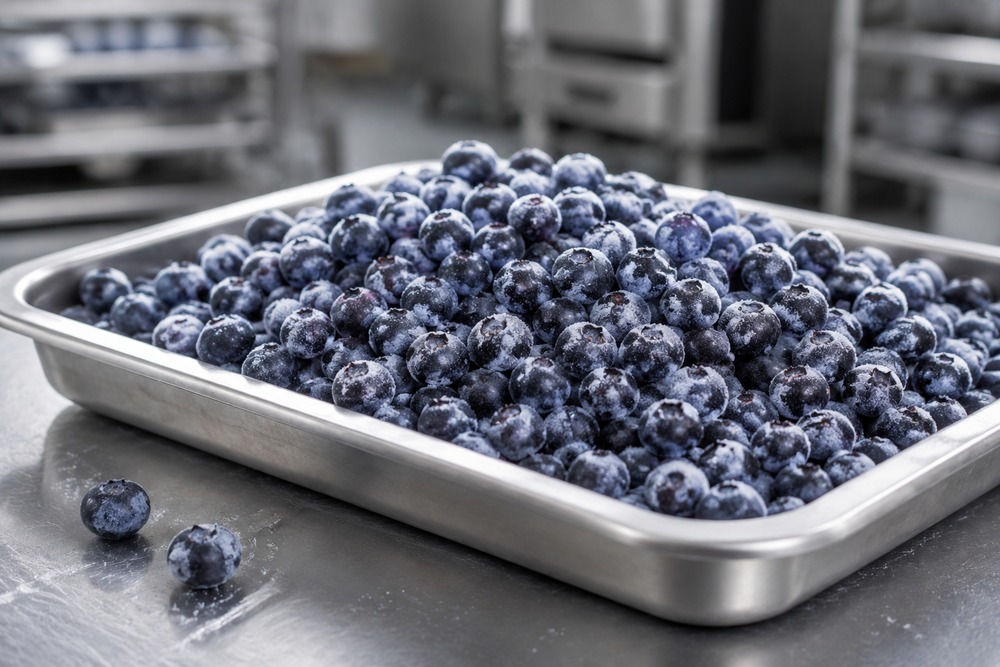
What Are IQF Whole Blueberries?
IQF whole blueberries are blueberries that have been individually quick frozen. Instead of freezing together in a solid block, the berries remain separate and free-flowing.
The fruit is normally selected, cleaned, inspected and rapidly frozen soon after harvesting. This process helps maintain the berries’ recognisable shape, natural colour and characteristic sweet-tart flavour.
Whole IQF blueberries can be accurately weighed and incorporated into recipes without defrosting an entire pack.
What Does IQF Mean?
IQF stands for Individually Quick Frozen. Each berry is rapidly frozen as an individual piece at a very low temperature.
Rapid freezing limits the formation of large ice crystals that can damage the fruit’s cellular structure. It also prevents the berries from becoming one solid frozen mass.
For manufacturers, this provides easier portioning, reduced waste and greater flexibility during production.
Why Choose IQF Blueberries Instead of Fresh Blueberries?
IQF blueberries offer several commercial advantages:
- Year-round availability
- Longer frozen shelf life
- Reduced risk of spoilage
- No routine washing or sorting before use
- Easy weighing and portion control
- Consistent supply for repeat production
- Reduced preparation time
- Lower ingredient waste
- Convenient use in automated processes
- Access to blueberries outside the fresh season
Fresh blueberries may still be appropriate for products where an entirely fresh texture is essential. IQF blueberries are particularly effective in cooked, blended, frozen and manufactured applications.
What Are IQF Whole Blueberries Used For?
IQF whole blueberries can be used in:
- Muffins, cakes and sweet breads
- Pies, pastries and bakery fillings
- Smoothies and blended drinks
- Yoghurt and dairy products
- Ice cream, sorbet and frozen desserts
- Breakfast cereals and porridge
- Jams, compotes and sauces
- Cheesecakes and dessert toppings
- Frozen fruit blends
- Ready-to-blend smoothie portions
- Foodservice desserts
- Retail frozen fruit packs
The best handling method will depend on whether visible berry identity, colour distribution or a smooth consistency is required.
Should Frozen Blueberries Be Defrosted Before Baking?
In many bakery recipes, defrosting is unnecessary. Frozen berries can often be folded gently into dough or batter shortly before depositing and baking.
Keeping the berries frozen may help protect piece integrity and reduce colour bleeding. However, frozen fruit can affect batter temperature, baking time and moisture distribution.
Commercial trials should assess:
- Batter viscosity
- Berry distribution
- Bake time and core temperature
- Colour migration
- Moisture release
- Finished-product texture
- Berry integrity after baking
The correct method will depend on the recipe, berry inclusion rate and production system.
Are Frozen Blueberries as Nutritious as Fresh?
Blueberries naturally contain fibre, vitamin C and plant compounds including anthocyanins. Freezing is an established preservation method that can help retain many of these components.
The exact nutritional content of an IQF blueberry product will depend on the fruit variety, growing conditions, maturity, processing and frozen storage.
The nutritional value of the finished food will also depend on the inclusion rate and wider recipe. Any nutrition or health claims should be supported by analysis and assessed against current UK or EU requirements.
Are IQF Blueberries Suitable for Vegan and Gluten-Free Recipes?
Blueberries are naturally plant-based and do not intrinsically contain gluten. Their suitability for a specific vegan, vegetarian or gluten-free product must still be confirmed through the supplier’s ingredient, allergen and cross-contact documentation.
Manufacturers should also assess every other ingredient and the production environment before making a claim about the finished product.
Are IQF Blueberries Suitable for Clean-Label Products?
IQF whole blueberries can support formulations based on simple, recognisable ingredients. However, manufacturers should check the product’s current ingredient declaration before approving packaging or marketing claims.
“Clean label” does not have a single legal definition. Claims should be based on the complete recipe rather than the blueberry ingredient alone.
The technical specification should confirm whether sugar, preservatives or other ingredients have been added.
What Is the Shelf Life of IQF Whole Blueberries?
IQF fruit commonly has an extended frozen shelf life when stored continuously at –18°C or below. The exact shelf life of Frucom’s IQF whole blueberries should be taken from the current product specification and packaging.
Manufacturers should use the labelled best-before date, follow stock-rotation procedures and monitor the frozen cold chain.
Are Samples Available for Product Development?
Yes. Manufacturers can contact Frucom to request a sample for recipe trials, sensory assessment or technical approval.
A representative sample allows development teams to assess berry size, appearance, flavour, juice release and processing performance before committing to commercial volumes.
Trials should reproduce the intended manufacturing, storage and reheating conditions as closely as possible.
Why Choose Frucom for IQF Whole Blueberries?
Frucom has more than 25 years of experience supplying exotic frozen produce and IQF ingredients to food manufacturers across the UK and Europe.
Customers choose Frucom for:
- Specialist frozen-ingredient expertise
- Commercial product formats
- Technical documentation
- Batch traceability
- Responsive customer support
- Reliable frozen supply
- Samples for product development
- Access to a wider range of IQF fruits
Whether you are developing muffins, smoothies, dairy products, desserts or frozen fruit blends, Frucom can help you assess the appropriate blueberry specification for your process.
Conclusion
IQF whole blueberries give food manufacturers, caterers and commercial kitchens a convenient way to add real fruit, natural colour and a recognisable blueberry flavour to a wide range of products. Their individually frozen format supports accurate portioning, year-round availability and reduced preparation waste.
They can be used in bakery products, breakfast foods, smoothies, yoghurt, desserts, sauces and fruit preparations. However, manufacturers should complete application trials to assess moisture release, colour migration, fruit integrity and texture after thawing, mixing, baking or reheating.
View Frucom’s IQF whole blueberries or contact Frucom to request a sample, current technical specification, pricing and availability.