
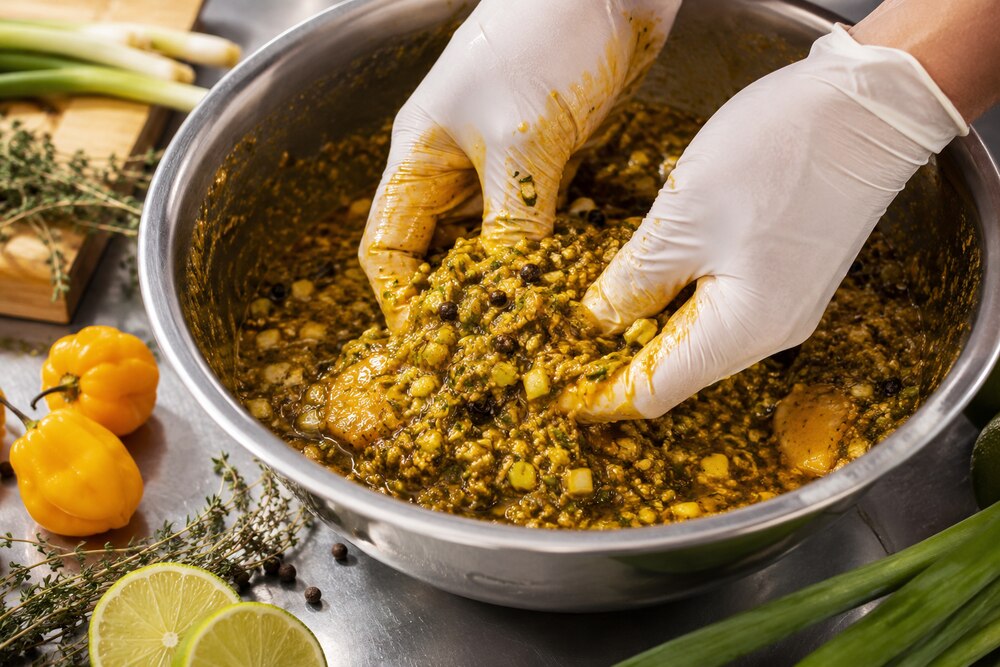
IQF whole Yellow Scotch Bonnet chillies give food manufacturers a convenient way to introduce authentic Caribbean heat, a distinctive fruity flavour and vibrant yellow colour into commercial recipes.
Scotch Bonnet is a hot chilli variety belonging to Capsicum chinense. It is widely associated with Caribbean cooking, where its combination of pungency, sweetness and tropical aroma makes it an important ingredient in jerk marinades, pepper sauces, curries, soups and stews.
Frucom’s IQF whole Yellow Scotch Bonnet chillies are produced in Ecuador from 100% Scotch Bonnet chillies. Their whole, individually frozen format gives manufacturers flexibility over how the chillies are cut, blended or cooked.
What Are IQF Whole Yellow Scotch Bonnet Chillies?
IQF whole Yellow Scotch Bonnet chillies are ripe yellow chillies that have been selected, washed, disinfected, blanched, cooled and individually quick frozen.
IQF stands for Individually Quick Frozen. Each chilli is frozen separately rather than as part of a solid block. This produces a free-flowing ingredient that can be removed from frozen storage in the required quantity.
The whole format retains the chilli’s recognisable shape and gives product developers control over its final use. The chillies can be blended into sauces, chopped for visible pieces, cooked whole to flavour a recipe or processed into a custom paste.
Frucom’s product ranges in colour from bright to dark yellow, with the natural variation expected from well-ripened chillies.
How Hot Are Yellow Scotch Bonnet Chillies?
Yellow Scotch Bonnet chillies typically measure between 100,000 and 350,000 Scoville Heat Units.
The Scoville scale measures chilli pungency, with higher values indicating greater heat. Scotch Bonnets are considerably hotter than jalapeños and many everyday cooking chillies, but generally less intense than Ghost chillies, Trinidad Scorpion chillies and Carolina Reaper chillies.
Scotch Bonnet heat is accompanied by a characteristic fruity, aromatic flavour. This makes the chilli especially useful when a manufacturer wants noticeable pungency without losing the ingredient’s underlying tropical character.
Natural heat can vary according to crop, growing conditions and maturity. Manufacturers should therefore agree an appropriate specification and evaluate a representative sample in the finished formulation.
What Are the Benefits of IQF Whole Scotch Bonnets?
Fresh chillies are seasonal and highly perishable. They may also vary in colour, ripeness and availability. IQF whole chillies offer several manufacturing advantages:
- Year-round availability
- Free-flowing format for easy portioning
- Reduced washing and preparation
- Less spoilage than fresh chillies
- Extended frozen shelf life
- Recognisable whole-chilli appearance
- Flexibility to chop, blend or cook as required
- Reduced trimming and preparation waste
- Consistent supply for repeat production
- No rehydration, unlike dried chillies
The whole format can also support products where visible chilli pieces or an authentic preparation method are important. Manufacturers retain more control than they would have with a fixed dice or purée.
How Can Yellow Scotch Bonnet Chillies Be Used?
IQF Yellow Scotch Bonnets are suitable for a wide variety of sauces, ready meals and Caribbean-inspired foods.
Common applications include:
- Jamaican jerk marinades
- Caribbean pepper sauces
- Hot sauces and condiments
- Curry sauces
- Soups and stews
- Rice and bean dishes
- Chutneys and relishes
- Salsas and spice pastes
- Meat and plant-based marinades
- Ready meals
- Meal kits
- Foodservice recipes
Scotch Bonnet works particularly well with allspice, thyme, garlic, ginger, spring onion and lime. It can also be paired with mango, pineapple or other tropical fruits to create sweet-hot sauces and glazes.
The whole chilli may be used to infuse flavour into a dish before removal, or it can be chopped or blended when the full heat is intended to remain in the product.
Can IQF Scotch Bonnets Be Used Straight from Frozen?
Yes. IQF whole Yellow Scotch Bonnet chillies can be used directly from frozen in many cooked or blended applications.
They may be added to sauces, soups and stews during processing or placed into industrial blending equipment without complete defrosting, provided the validated production method supports this approach.
If the chillies need to be cut manually or used in a cold formulation, controlled defrosting may be required. The time outside frozen storage should be minimised, and thawed chillies should be refrigerated and used promptly.
Frucom specifies storage at –18°C or below, with –20°C identified as ideal. The product has a frozen shelf life of 24 months under the stated storage conditions. Refreezing after complete thawing is not recommended.
Are Whole Chillies Better Than Purée?
Neither format is universally better. The right choice depends on the finished product and manufacturing process.
Whole IQF Scotch Bonnets offer greater flexibility. They can be cut to a chosen size, blended to a required consistency or cooked whole. They are also appropriate where visible chilli identity matters.
Purée provides faster dispersion and may be preferable for sauces requiring a smooth, uniform texture. A pre-portioned purée can also simplify dosing where inclusion rates are fixed. Frucom supplies a range of frozen fruit, vegetable and chilli ingredients for commercial food production.
Whole chillies may suit traditional recipes and flexible development work, while purée may be more efficient for standardised high-volume sauces.
How Should Scotch Bonnet Chillies Be Handled?
Scotch Bonnets contain substantial levels of capsaicinoids and require appropriate workplace controls.
A risk assessment should consider protective gloves, eye protection, protective clothing and ventilation. Staff should avoid touching their eyes, face or exposed skin while handling the product.
Cutting and blending can release chilli material into the surrounding environment. Equipment should therefore be contained where practical, and utensils and surfaces must be cleaned thoroughly after use.
Clear identification and production sequencing can help prevent unintended transfer into mild products. Staff should also receive suitable training in chilli handling and exposure procedures.
What Should Manufacturers Check Before Buying?
Before sourcing IQF Scotch Bonnet chillies in bulk, confirm:
- Chilli variety and botanical identity
- Country of origin
- Ingredient declaration
- Expected Scoville range
- Colour and maturity tolerances
- Size and defect tolerances
- Seed and stalk requirements
- Microbiological limits
- Pesticide-residue testing
- Batch traceability
- Packaging and pallet configuration
- Storage conditions and shelf life
- Available food-safety certifications
A sample should be tested in the proposed recipe before commercial production begins.
Why Source IQF Yellow Scotch Bonnet Chillies from Frucom?
Frucom supplies frozen chillies and specialist ingredients to food manufacturers across the UK and Europe. With more than 25 years of experience in exotic frozen produce, Frucom supports customers with established sourcing, technical documentation, traceability and dependable service.
Frucom’s IQF whole Yellow Scotch Bonnet chillies are produced in Ecuador and declared as 100% Scotch Bonnet. They are supplied in 13kg units, with a 780kg pallet configuration and a 24-month frozen shelf life.
Contact Frucom to request a sample, obtain the current specification or discuss your required heat, colour and pack format.
IQF Whole Yellow Scotch Bonnet Chillies Frequently Asked Questions
How hot are Yellow Scotch Bonnet chillies?
They typically measure approximately 100,000–350,000 Scoville Heat Units.
What do Yellow Scotch Bonnets taste like?
They combine strong chilli heat with a sweet, fruity and aromatic flavour associated with Caribbean cooking.
Can they be cooked from frozen?
Yes. They can be used from frozen in many sauces, soups, stews and blended applications.
Where can manufacturers buy IQF Yellow Scotch Bonnets?
Frucom supplies IQF whole Yellow Scotch Bonnet chillies for commercial food production. Contact the team for specifications, samples and availability.
Related Frucom Chilli Products and Guides
If you are comparing chilli varieties or different heat levels for food manufacturing, you may also be interested in: