
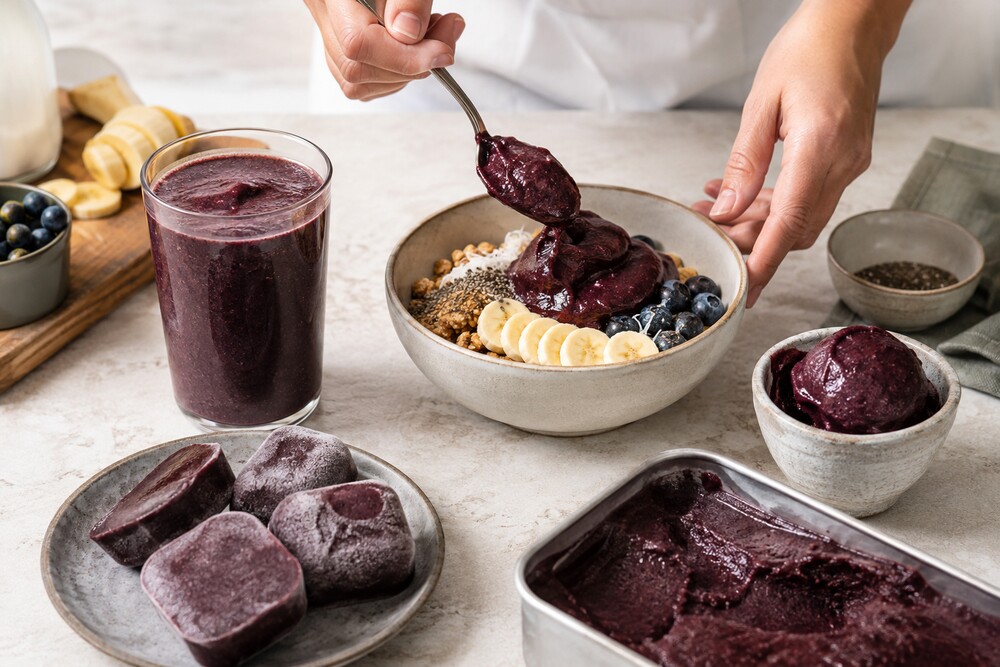
Frozen organic acai pulp gives food and beverage manufacturers a practical way to introduce authentic açaí flavour, a deep purple colour and a smooth, creamy texture into new and existing products.
Produced from the fruit of the açaí palm, Euterpe oleracea, the pulp is separated from the fruit’s large seed and frozen to preserve its distinctive characteristics. This is especially important because fresh açaí is highly perishable and must be processed soon after harvesting. For manufacturers, juice bars, foodservice businesses and commercial kitchens, frozen organic acai pulp provides a convenient, year-round alternative to sourcing and processing fresh fruit.
What Is Frozen Organic Acai Pulp?
Frozen organic acai pulp is made from organically grown açaí fruit that has been harvested, processed into pulp and frozen.
Açaí fruits have a relatively small amount of edible flesh surrounding a large seed. Specialist processing equipment separates this flesh from the seed, creating a smooth pulp with the fruit’s characteristic dark violet-purple appearance.
The pulp has a distinctive earthy fruit flavour that is less sweet than many other tropical fruits. Its smooth texture and rich colour make it especially popular in smoothie bowls, drinks and frozen desserts. Frucom’s frozen organic acai pulp is produced in Peru from Euterpe oleracea. It is firm when frozen and becomes smooth and creamy after defrosting.
Why Is Acai Usually Sold Frozen?
Fresh açaí deteriorates quickly after harvest. Processing and freezing the fruit close to its source helps protect its flavour, colour and overall quality while making international distribution possible.
Frozen pulp also offers commercial advantages over fresh fruit:
- Year-round ingredient availability
- Extended storage life
- Reduced preparation requirements
- Consistent colour and texture
- Less risk of spoilage
- Easier stock management
- Convenient use in blended recipes
- Access to authentic açaí outside its growing region
Frucom’s frozen organic acai pulp has a stated frozen shelf life of 24 months when stored under the specified conditions. This gives manufacturers greater flexibility when forecasting demand and planning production.
Manufacturers looking for other frozen fruit formats can also explore Frucom’s wider IQF fruit range.
What Does Organic Acai Pulp Taste Like?
Pure açaí does not taste like a conventionally sweet berry. It has an earthy, mildly tart flavour, sometimes accompanied by subtle cocoa-like notes.
Because of this profile, açaí is frequently combined with sweeter fruits such as banana, mango, strawberry or pineapple. Frucom’s IQF pineapple purée is one option for manufacturers looking to combine açaí with a sweeter tropical fruit ingredient.
Açaí also works well with apple juice, coconut, yoghurt and plant-based milk alternatives. The final flavour will depend on the percentage of açaí used and the other ingredients in the formulation. Manufacturers should conduct trials to establish the right balance of fruit, sweetness and acidity for their target customer.
How Can Frozen Organic Acai Pulp Be Used?
Frozen organic acai pulp is suitable for a broad range of food, beverage and foodservice applications.
Common uses include:
- Açaí and smoothie bowls
- Fruit smoothies
- Juices and blended drinks
- Functional beverage formulations
- Protein shakes
- Ice cream and sorbet
- Frozen lollies
- Yoghurt and dairy alternatives
- Dessert sauces
- Cheesecakes and chilled desserts
- Fruit preparations
- Breakfast products
Its intense purple appearance can also provide natural visual impact. However, colour performance should be assessed in the complete formulation because processing, acidity, heat and interaction with other ingredients can influence the final result.
Can Frozen Acai Pulp Be Used Straight from the Freezer?
Yes. Frozen organic acai pulp can be blended directly from frozen in products such as smoothies, açaí bowls and frozen drinks. Using it from frozen can contribute to a thick, cold and creamy consistency.
For other applications, the pulp may need to be defrosted before mixing, pumping or portioning. Defrosting should take place under controlled conditions in accordance with the product specification and the manufacturer’s food safety procedures.
Frucom recommends storing its frozen organic acai pulp at –18°C or below, with –20°C identified as the ideal storage temperature. Once opened, unused material should be returned to frozen storage promptly to maintain quality. Refreezing after complete defrosting is generally not recommended.
Does Acai Contain Antioxidants?
Açaí naturally contains anthocyanins, the plant pigments that contribute to its deep purple colour. It also contains fibre and naturally occurring fats.
These characteristics have helped make açaí popular in health-conscious foods and functional product categories. However, manufacturers should avoid making broad or unapproved health claims. The nutritional profile of the final product will depend on the amount of açaí used, the complete recipe and the production method.
Any nutrition or health claims should be supported by analysis of the finished product and checked against current UK or EU regulations.
What Does Organic Certification Mean?
Organic certification demonstrates that an ingredient has been produced and handled in accordance with an applicable organic standard. Manufacturers wishing to market a finished product as organic must ensure that the complete recipe, processing operation and certification arrangements meet the relevant requirements.
The current organic certificate, ingredient declaration and chain-of-custody documentation should therefore be reviewed during supplier approval.
Frucom also states that GlobalG.A.P. certification is available for its frozen organic acai pulp.
What Should Manufacturers Check Before Buying?
When sourcing frozen organic acai pulp in bulk, manufacturers should ask:
- Is the product certified organic?
- What is the exact ingredient declaration?
- Is the pulp sweetened or unsweetened?
- What is its country of origin?
- What colour and flavour tolerances apply?
- What are the pH and solids specifications?
- Has the product been pasteurised?
- Which microbiological tests are completed?
- How is batch traceability managed?
- What storage temperature is required?
- What packaging and pallet formats are available?
- Can a current specification and sample be supplied?
Frucom’s product has a specified pH range of 4.1–4.5, a 17.5kg net unit weight and an 840kg pallet size.
Why Source Frozen Organic Acai Pulp from Frucom?
Frucom supplies IQF fruit and frozen fruit ingredients to food manufacturers across the UK and Europe. With more than 25 years of experience in exotic frozen produce, the business provides sourcing expertise, technical information, traceability and dependable customer support.
Frucom’s frozen organic acai pulp is produced in Peru and offers the violet-purple colour, characteristic flavour and creamy defrosted texture associated with açaí.
Contact Frucom to request a sample, obtain the current specification or discuss frozen organic acai pulp for your next food or beverage development.
Frozen Organic Acai Pulp Frequently Asked Questions
What is frozen organic acai pulp?
It is the edible pulp of organically grown açaí fruit, separated from the seed and frozen to preserve its quality.
Is pure acai naturally sweet?
Açaí has an earthy, mildly tart flavour and is less sweet than many fruits. It is often blended with banana, mango or another naturally sweet ingredient.
What products use acai pulp?
Popular applications include açaí bowls, smoothies, juices, frozen desserts, yoghurt, protein shakes and functional drinks.
Where can manufacturers buy frozen organic acai pulp?
Frucom supplies frozen organic acai pulp for commercial food and beverage production. Contact the team for samples, specifications and availability.
Related Frucom Products and Guides
Manufacturers sourcing açaí and other frozen fruit ingredients may also find these useful: